Strong Social Ties Slows Biological Aging

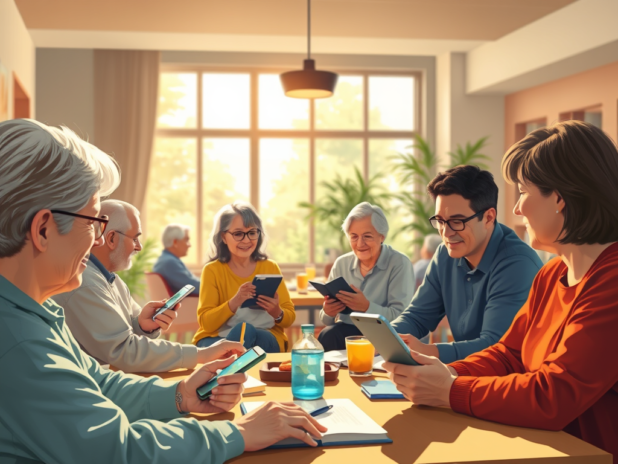
A new medical study found that adults with close relationships and community ties experienced slower biological aging and less chronic inflammation.

Experts say that you should view loneliness just like you would hunger or thirst: a signal that you’re lacking something essential for your health. Having a rich social life may do more than brighten your days—it could also help slow biological aging, according to a new study.

Co-authors of the study, published in the journal Brain, Behavior, and Immunity, included Laura Kubzansky, professor of social and behavioral sciences at Harvard T.H. Chan School of Public Health, and researchers from Cornell University, Weill Cornell Medicine, and Renaissance School of Medicine at Stony Brook University.

Drawing on data from more than 2,100 participants in the long-running Midlife in the United States (MIDUS) project, researchers discovered that adults with higher cumulative social advantage—meaning long-standing, robust relationships with family and friends and in religious and community groups—had biological markers showing slower cellular aging and reduced levels of chronic inflammation as compared to their less-connected peers. Read full study


How does our current aging approach of displacing older adults or ourselves contributes to these new findings? What are your thoughts? Join the conversation
Marguerite’s Table

by Nicolette Francey Asselin, M.D.

“As a child, my family’s approach to mealtime was without food fights. What I learned stayed with me throughout my life. I realize now that’s how both my loved ones and I have effortlessly maintained good health.”

Envision the meal you carefully prepared with love, spattered all over your kitchen!

“Eating should be fun.”  Chef José Andrés on «60 Minutes»

Read


Author: Nicolette Francey Asselin M.D. “Taste Buds” The Magic and Fun of Sensible Food.

A Good Appointment

Going to the doctor isn’t most people’s favorite activity. But it is part of staying healthy (the other major parts are what you eat and how much you exercise). So you may as well get the most out of it. As a doctor I often get asked by friends and family how to make the most of a medical visit. Here’s my advice, and it’s basically the same whether you are the patient, or a family member or a caregiver of the patient.  

Creative Resilience

By Nicolette Asselin, M.D.

In an age in which terrorism, natural disasters, illnesses, shootings, and wide-scale industrial errors and accidents are occurring with increasing frequency, there is a tremendous need to develop ways to cope with the aftershocks. Post-traumatic illnesses are on the rise, and we need to find new ways to curtail and prevent their rise. Building resilience has become an important topic. In this story, I tried to illustrate the ways our family dealt with a personal tragedy.  Cont

Get Publication

AnneFrancey copy

“Suleika’s Shield”,  by Anne Francey


Would you like to sponsor this website? Contact us